Polymeric Sand Failure? Check These 5 Warnings First.
When polymeric sand joints begin to fail, it's easy to assume the sand itself is the problem. In reality, joint failure is often a symptom of underlying installation or drainage issues.
If you're noticing cracking, erosion, or washout in your paver joints, here are five warning signs worth investigating before blaming the polymeric sand.
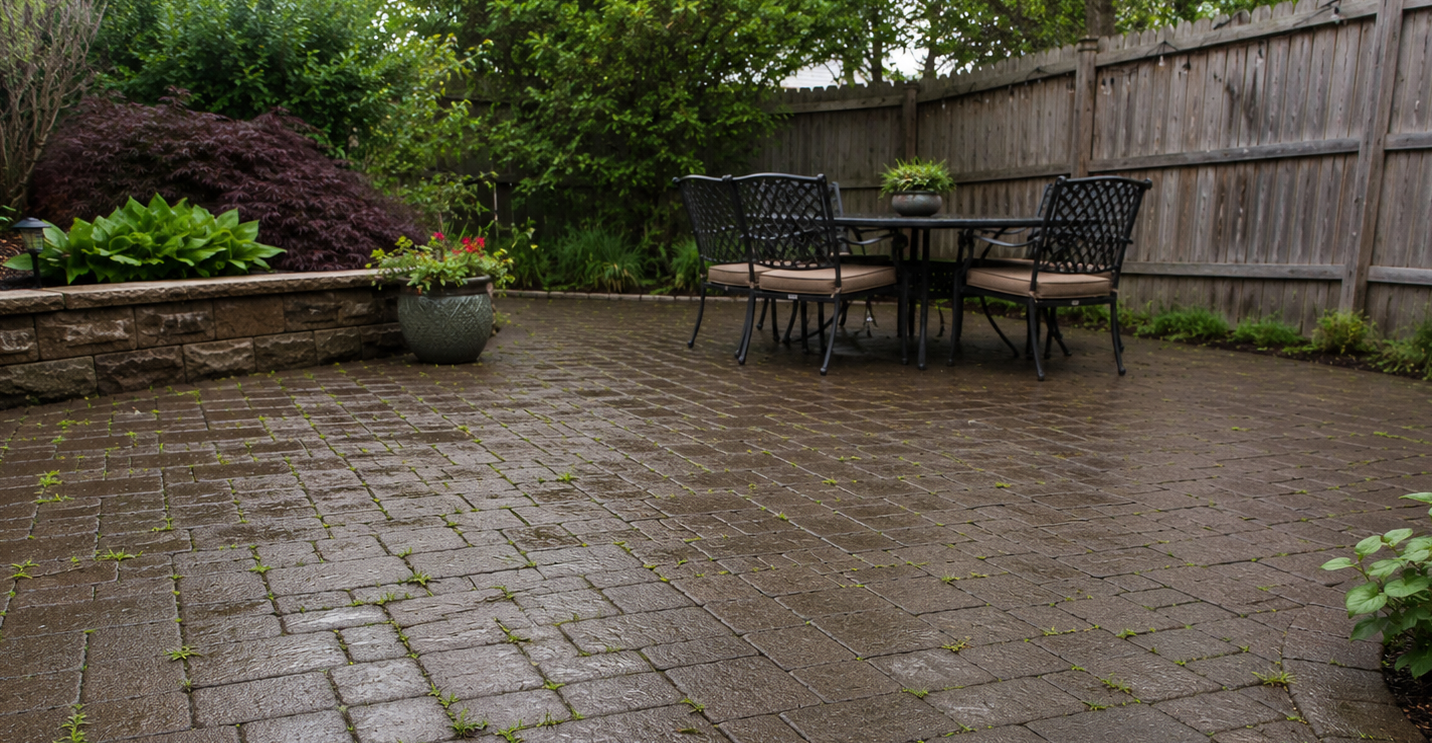
1. The pavers always look wet.
Do your pavers appear damp even when it hasn't rained recently?
Constantly wet pavers often indicate an underlying moisture or drainage problem. Excess moisture trapped beneath the pavement can weaken the performance of polymeric sand over time and contribute to premature joint deterioration.
2. The joints are filled too high.
Polymeric sand should never sit flush with the surface of the pavers.
For proper performance, joints should be filled to approximately 1/8” below the paver chamfer. If the sand is exposed to foot or vehicle traffic, it can wear away more quickly and become vulnerable to damage over time. Proper compaction during installation is also critical to ensure the joints are fully and evenly filled. (As a reminder, your joints will be missing 30-50% of the required sand if you fail to compact!)
3. The pavers are moving.
Take a close look at the pavers themselves, especially around the edges of the installation.
If pavers are shifting, rocking, or separating, the polymeric sand is likely being asked to do a job it wasn't designed to do. Polymeric sand helps lock pavers together, but it cannot compensate for improperly restrained edges or unstable pavement structures. Movement almost always leads to future joint failure.
4. The base material doesn’t drain.
Not all base materials perform the same way.
One common culprit behind polymeric sand issues is stone dust. Stone dust used to be commonly used for paver base. The problem: it retains moisture and drains poorly, which can create conditions that negatively impact joint performance. A properly constructed, free-draining base is essential for the long-term success of any paver installation.
5. The joints are growing weeds!
Many homeowners are surprised to learn that polymeric sand is designed to help prevent weeds—not completely eliminate them.
While a properly installed polymeric sand significantly reduces the opportunity for weed growth, airborne seeds, organic debris, and environmental conditions can still allow weeds to develop over time. Proper joint consolidation along with regular maintenance after installation remains an important part of keeping paver joints looking their best.
The Bottom Line
When polymeric sand joints fail, the root cause is often related to moisture, drainage, pavement movement, installation practices, or unrealistic expectations about maintenance.
Before just replacing the sand, take a closer look at the entire pavement system. Identifying and correcting the underlying issue can help prevent the same problem from recurring and improve the long-term performance of your hardscape.