
Spring = Cleaning & Sealing Season
Aside from the longer days, rising temperatures, and flowers blooming, we know spring time is here when our Inbox fills up with cleaning and sealing questions. In this article, we’re going to share our answers to the most common questions we’ve received from homeowners over the past month.
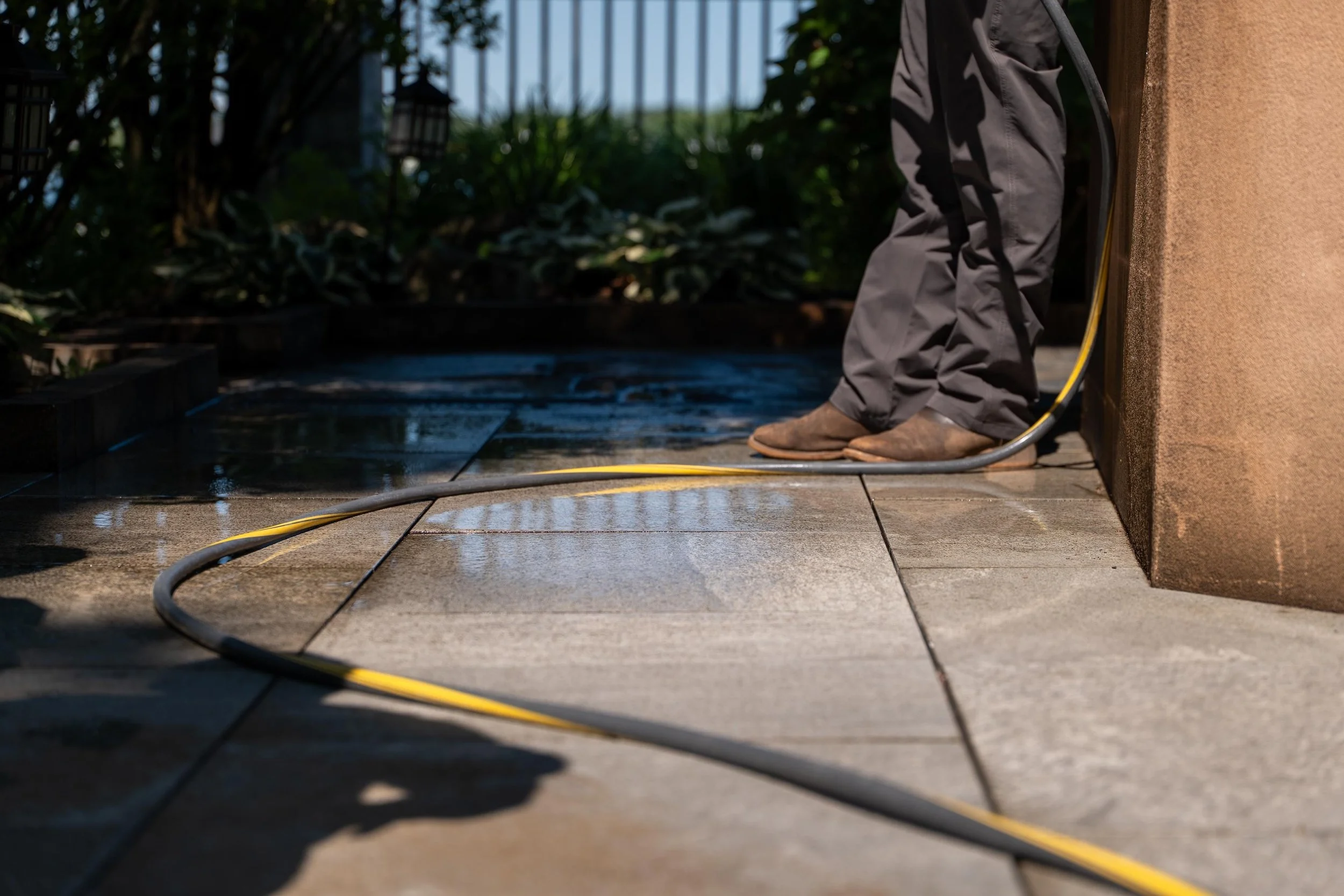
My pavers look dull. Do I need to reseal?
Most sealers last between three to five years. If the surface looks faded or worn, it’s likely time to clean and reapply.
Can I just clean and reseal over the old coating?
A product like Gator Resealer works well when there’s still a layer of sealer on the pavers that needs some rejuvenation.
Light wear → reseal
Minimal - no wear → proceed with caution – the idea is to avoid layering on too many coats
Do I really need to clean before sealing?
Absolutely. Non-negotiable.
A sealer will:
Trap dirt and stains
Highlight imperfections (not hide them)
Reduce bond if surface isn’t clean
Efflorescence cleaning is a must on every sealer job.
READ: Why You Must Use An Efflorescence Cleaner Before Sealing Pavers
How long should I wait before sealing new pavers?
Be sure to confirm with the paver manufacturer but a good rule of thumb is to wait 60–90 days minimum. Let efflorescence run its course first—or you risk trapping it under the sealer.
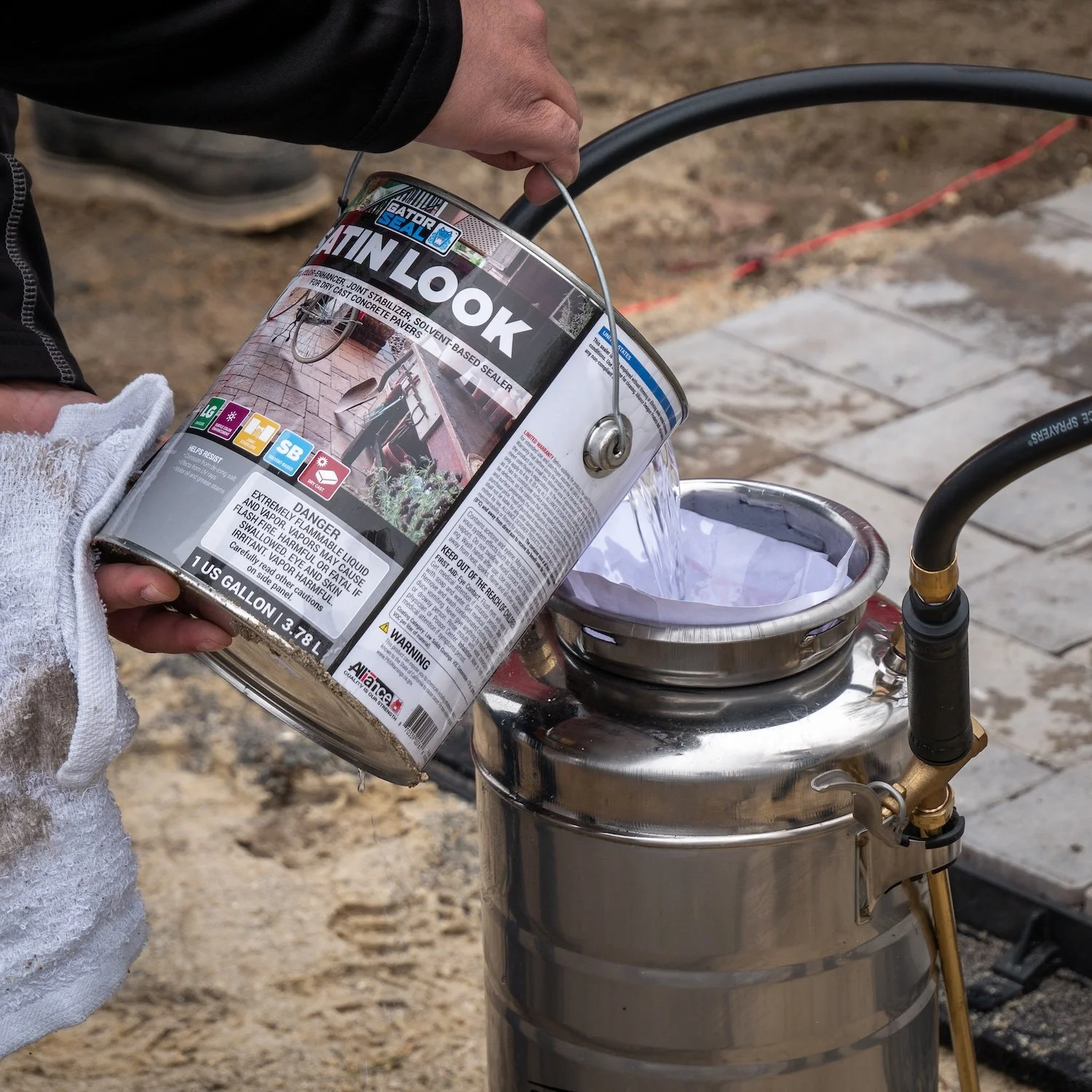
What sprayer should I use?
The Chapin Xtreme fitted with a 0.5 / 1.0GPM brass nozzle is a popular choice for applying sealers. It’s important to note that plastic will not survive a solvent-based sealer. Be sure you’re using the right type of equipment for the sealer you’re working with.
Can I seal right after installing polymeric sand?
No, you should wait until the polymeric sand is fully cured. While this is completely dependent upon the weather and environment, it typically takes about 48 hours.
How do I remove stains (moss, mildew, organics)?
The best way to treat organic stains is by using an oxidizer-based cleaner (e.g., pool shock mix):
Warm water + oxidizer
Scrub and rinse thoroughly
Be sure to keep the solution away from any outdoor fabrics and metal and then rinse everything down well afterwards.
What if I don’t know what sealer was used before?
You have two options.
You can play it safe and go with a solvent-based sealer. It can safely be applied on a surface previously sealed with solvent- or water-based sealer.
Perform a Xylene test. Choose a low-traffic area and pour a quarter-sized drop of Xylene onto a paver. Wait about 15 seconds, wipe off the Xylene, and touch the area. If it feels tacky, it means a solvent-based sealer was used. If it’s not, a water-based sealer was most likely used.
Remember to always do a test patch before applying sealer to the entire surface.
Key rule: Don’t mix incompatible systems.
Solvent on solvent = YES
Solvent on water = YES
Water on solvent = NO

Final Thought
Spring jobs move fast—having the answers to commonly asked cleaning and sealing questions not only positions you as a true expert, but keeps you profitable and able to avoid callbacks.
Need help choose the right cleaning or sealing product? We’d be happy to connect you with your local rep! Contact us.
