5 Mistakes To Avoid When Installing Joint Sand
Every hardscape project has the same goal:
Get in, get it right, and move on to the next job.
But when joints fail—whether it’s washout, cracking, or peeling—it usually comes down to one thing:
Something went wrong during installation.
The reality is, most joint failures aren’t caused by the product itself—they’re caused by missed steps, poor conditions, or using the wrong material for the job.
Let’s break down five of the most common mistakes we see in the field—and how to avoid them.

Mistake #1: Choosing the Wrong Joint Material
Not all joint materials are designed for the same conditions.
A common mistake that contractors make is treating polymeric sand and resin sand as interchangeable—when they behave very differently.
Polymeric sand (like G2 Maxx or G2 Supersand) is flexible and designed to move with the system
Resin sand (like Gator Nitro or Nitro-X) creates a rigid, long-term bond
Polymeric Sand vs. Resin Sand: What’s the difference?
GET THE GUIDE
Choosing the wrong material can lead to:
Cracking (when rigidity doesn’t match movement)
Washout (when flexibility is needed but conditions are harsh)
Premature joint failure
How to avoid it:
Evaluate the base (traditional vs hybrid vs Gator Base)
Consider drainage conditions
Factor in movement (freeze/thaw, traffic, etc.)
Match the material to the job
Mistake #2: Ignoring Weather and Installation Conditions
Joint material performance is highly dependent on install conditions.
Common issues include:
Installing polymeric sand in poor weather conditions
Not accounting for moisture before or after installation
Rushing installs with rain in the forecast
For example:
Polymeric sand requires completely dry weather, base and pavers
Resin sand can be installed in wet conditions—but still requires proper base drainage
How to avoid it:
Always check the forecast before starting
Understand how your chosen material reacts to moisture
Don’t rush installs when conditions aren’t right
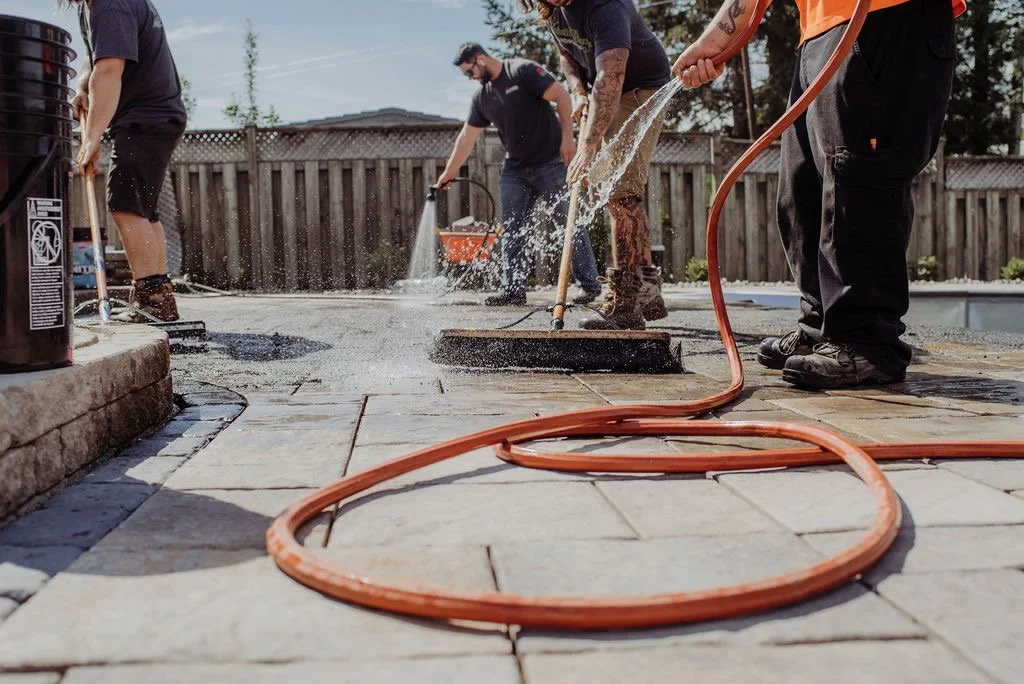
Mistake #3: Improper Watering (Polymeric Sand)
Watering is one of the most common failure points with polymeric sand—and one of the easiest to get wrong. Improper watering can result in an incomplete activation and ultimately weak joints.
The key is following the watering instructions for the product you’re using—not guesswork.
How to avoid it:
Follow manufacturer guidelines closely
Ensuring the watering process is done right the first time
Mistake #4: Poor Base and Drainage Conditions
Joint material is only as good as the base beneath it.
If water can’t properly drain through the system, problems will show up over time—no matter what material you use.
This is especially critical with:
Resin sands (which require a draining base)
Hybrid systems
Clay-heavy or poorly draining soils
Without proper drainage, you risk:
Water retention
Joint instability
Freeze/thaw damage
How to avoid it:
Ensure the base is designed for drainage
Use appropriate materials (clean stone, proper bedding layers)
Avoid trapping water beneath the system
Mistake #5: Rushing the Installation Process
Time pressure leads to shortcuts—and shortcuts lead to failures.
This often shows up as:
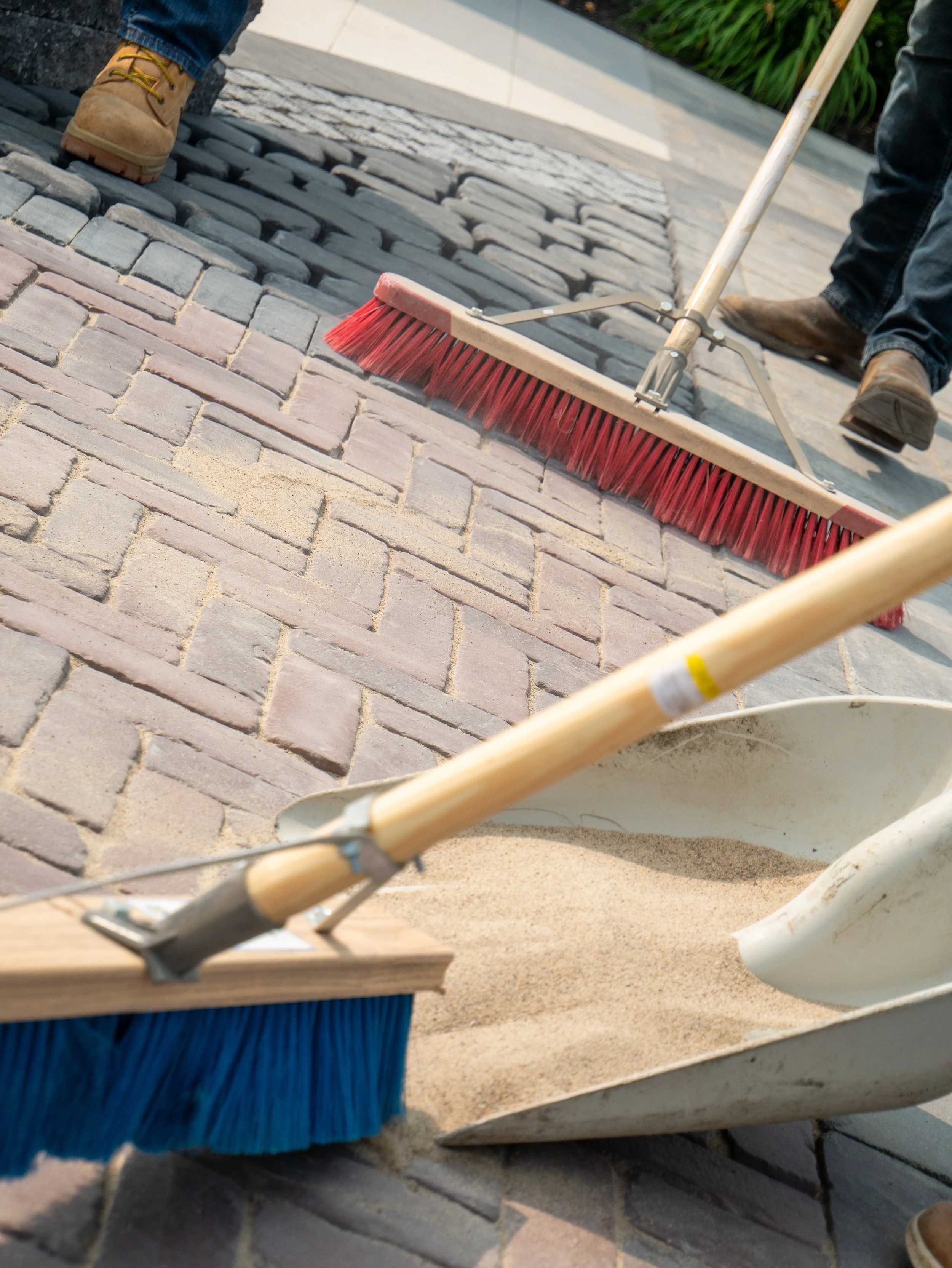
Skipping compaction of polymeric sand (which means your joints are missing 30-50% of necessary product!)
Not filling joints to the correct depth (the joint material should sit ⅛” below the chamfer of the paver)
Not following the installation instructions as specified on the bag
The result?
Weak joints
Callbacks
Reduced project lifespan
How to avoid it:
Never skip compaction when working with polymeric sand
Watering according to the instructions on the bag
Don’t skip steps of the install process
Focus on long-term performance—not short-term speed
5 Keys To A Successful Install
Choose the right material for the job
Consider weather and installation conditions
Water according to the instructions on the bag
Always account for drainage
Never take shortcuts
The Bottom Line
When joints fail, it’s rarely a mystery.
It usually comes down to:
Material selection
Installation conditions
Base preparation
Execution on the job site
Get those right, and you dramatically reduce the risk of callbacks and rework.
Want to Get It Right the First Time?
We’ve put together a Job Site Success Kit focused specifically on:
Choosing the right joint material
Avoiding common install mistakes
Improving job site efficiency and results
👉 Access the Job Site Success Kit here: