
What’s the difference between Gator Rock Bond and Gator Stone Bond?
For contractors and hardscape professionals, choosing the right stone binding system can directly impact:
Installation efficiency
Long-term durability
Maintenance callbacks
Overall project appearance
We offer two different binding agents: Gator Rock Bond and Gator Stone Bond (also known as DG Pathway Stabilizer) – and they are designed for very different types of installations. In this post, we’re going to break it down for you.
What Is Gator Rock Bond?
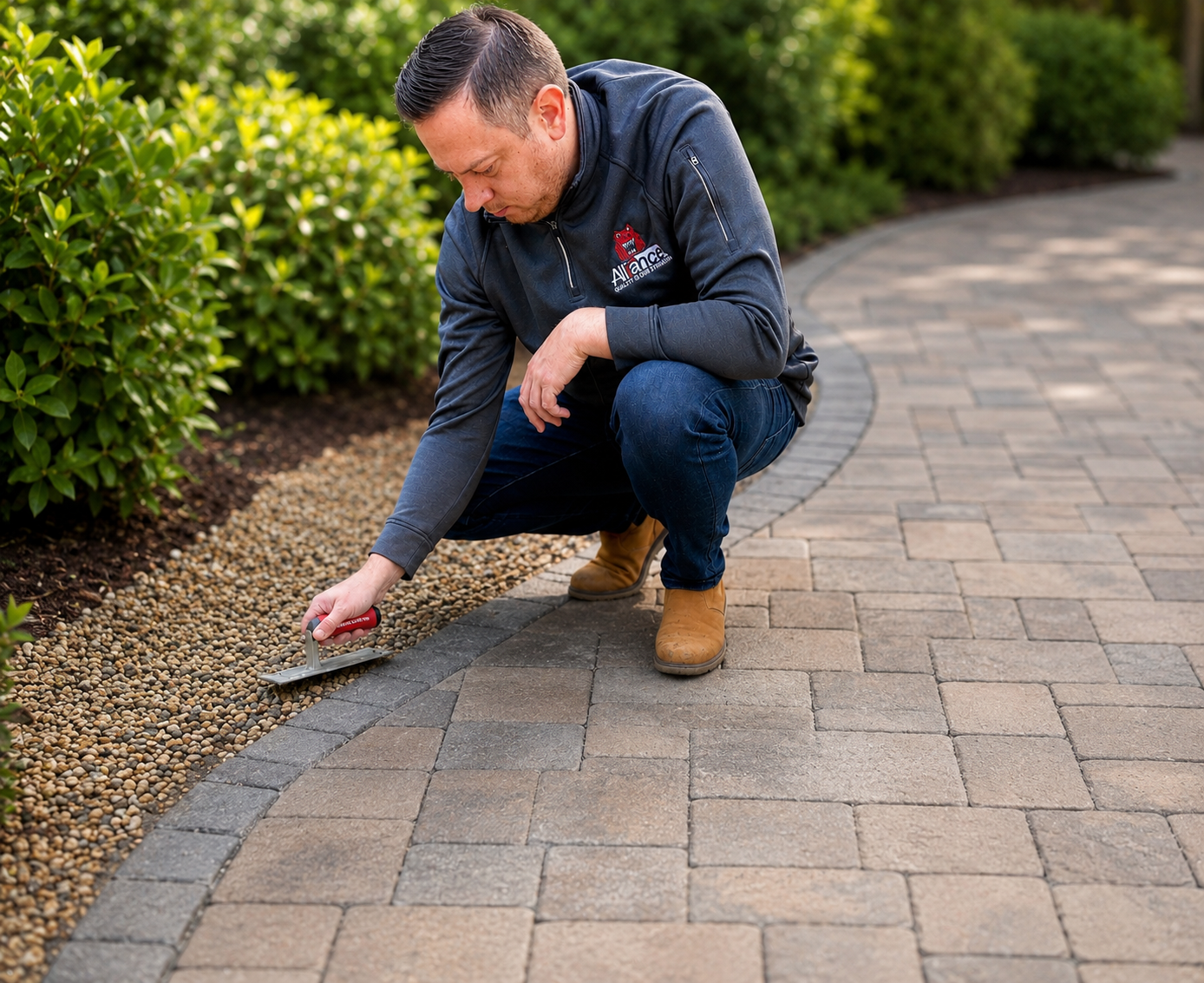
Gator Rock Bond is a one-component liquid binding agent designed to bind loose decorative stone while maintaining permeability. It’s available in a 1-gallon jug or as part of our Rock Bond Kit (which also comes with washed/clean river stone).
For contractors, Rock Bond offers a fast and approachable solution for:
Binding together decorative stone
Garden pathways
Tree wells
Hardscape accents
Pool borders
Pedestrian walkways
Showers and drains
It’s especially useful for projects where customers want:
The appearance of loose decorative stone
Smooth hardscape accents
Reduced migration of aggregates
Lower maintenance
Improved long-term aesthetics (We have projects in the ground that are over 10 years old!)
A 1-gallon jug, when mixed with 320 lbs. of dry clean stone, will cover approximately 80 sf. We recommend using aggregates that are 3/8" - 1/2" and the mixture should be applied at a thickness of about twice the size of your largest stone.
What Is the Gator Rock Bond Binder Kit?
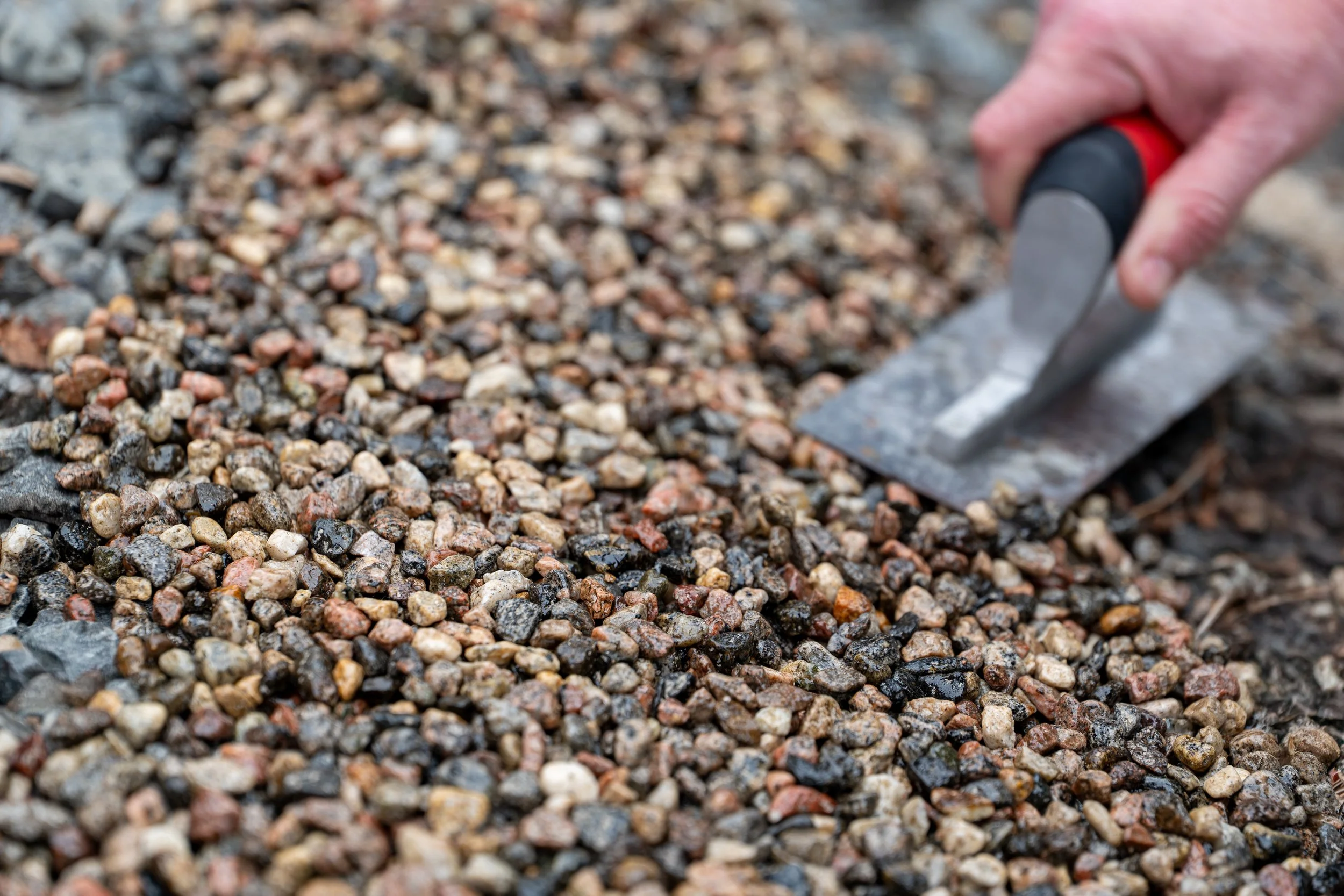
The Gator Rock Bond Binder Kit offers contractors a more complete packaged solution that includes:
Rock Bond liquid binder (½ qt.)
Washed, clean river stone (40 lb.)
The Rock Bond Kit is an excellent entry point into stone binders because it takes one very tedious step right out of the equation – having to wash the aggregate and wait for it to completely dry! The kit will cover approximately 8 sf. at a thickness of ¾.”
What Is Gator Stone Bond?
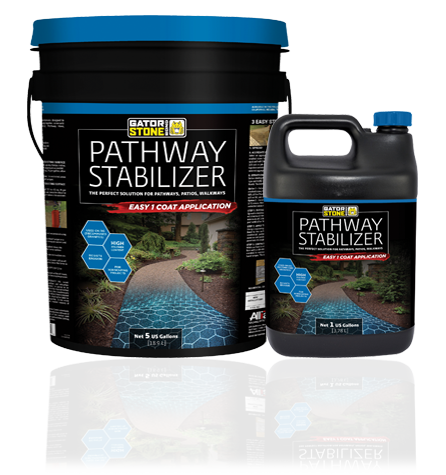
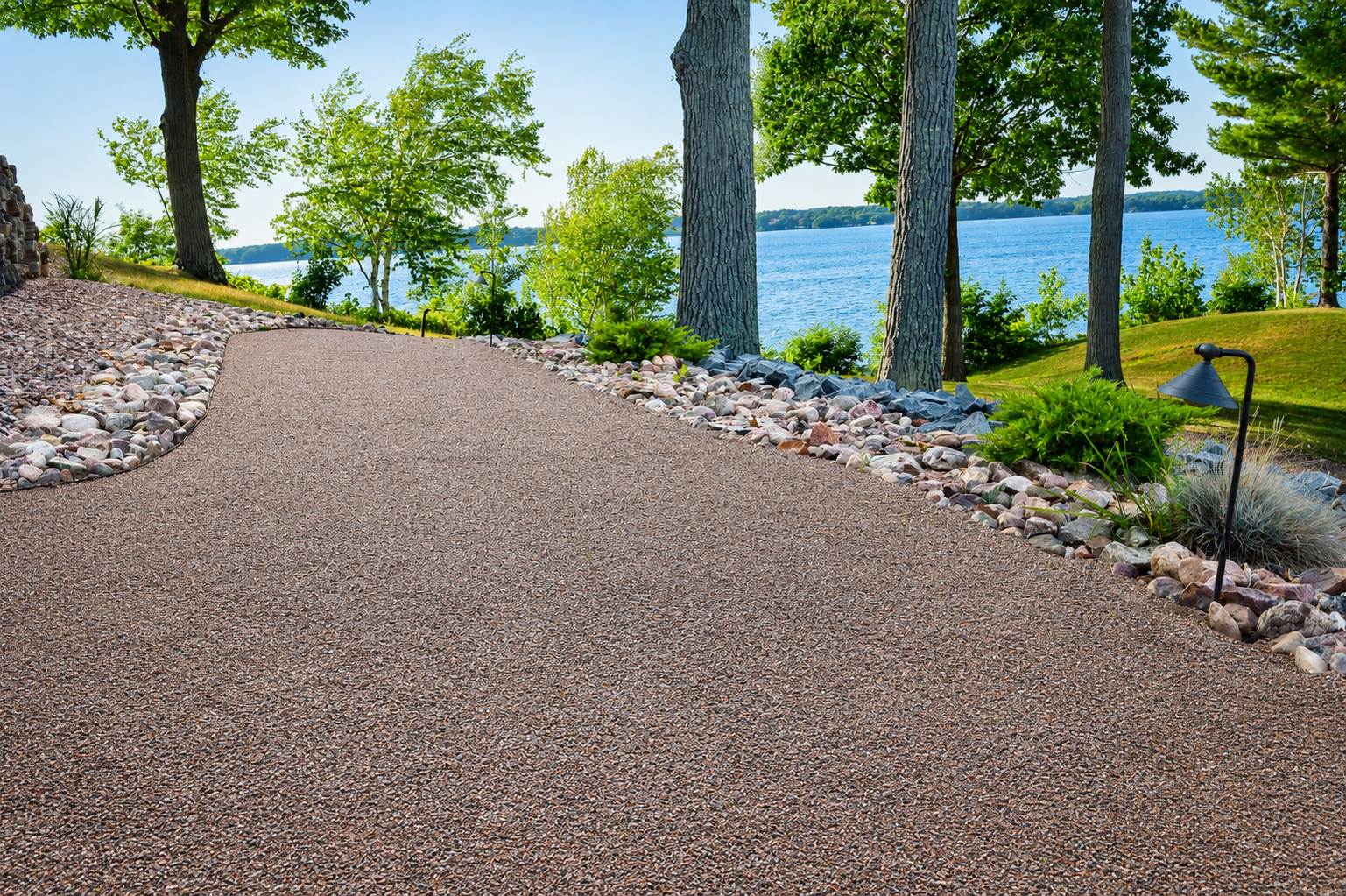
Gator Stone Bond, or Pathway Stabilizer, is an epoxy bonding system designed for more rigid, structural applications using decomposed granite (DG).
NOTE: This product is currently available in Arizona, California, Nevada, and Texas only.
Unlike Rock Bond, Stone Bond creates a hardened surface intended for:
Pedestrian residential and commercial applications
Patios and seating areas
Courtyards
Sloped surfaces
ADA-compliant pathways where loose gravel is not allowed
Gator Stone Bond comes in a 5-gallon bucket or 1-gallon jug. It should be used with an aggregate that contains a variety of sizes. For instance, crushed stone mixes such as 3/8 minus, 1/4 minus or 3/16 minus work well, while single size aggregates like 3/8 rock or pea gravel are not suitable.
DG Pathway Stabilizer
The Biggest Difference Contractors Should Understand
The easiest way to compare the two systems is this:
Gator Rock Bond
TO BIND Decorative StoneS
Best for:
Hardscape accents
Garden paths
Tree wells
Pool borders
Walkways
Outdoor showers
Drains
Key Benefits
Easy installation
One-component system
Permeable finish
Reduced washout
Approved for pedestrian use
The more trowel pressure = the smoother the finish
UV stable (the initial shine will diminish, but the finish will never yellow)
Long-lasting
Gator Stone Bond
DG PATHWAY STABILIZER
Best for:
Pedestrian installations (commercial and residential)
Surfaces where a natural look is desired
Areas where erosion or washout is a concern
Key Benefits
Hardened bonded surface
High durability
Natural looking finish
Strong long-term rigidity
Installation Considerations for Contractors
Rock Bond Installation
Rock Bond requires a properly prepared base. You can read more about base preparation here.
Product installation is a relatively simple process:
Prepare clean, dry aggregate
Mix binder with stone
Trowel into place (Note: The more pressure used, the smoother the finish)
Allow curing time (24-48 hours)
For best results, Rock Bond should be installed in dry conditions with temperatures above 60°F. It’s also important that the surface stays dry for at least 24 hours after application.
Stone Bond Installation
Stone Bond / Pathway Stabilizer must be installed on a properly prepared base. As a rule of thumb, the better the base preparation, the better the results. (Read more here.)
A new install looks like this:
Spread a maximum of 1” of the surface aggregate over the compacted base
Rake or screed to desired level (keep a minimum slope of 2 degrees to allow water runoff)
Using a watering can or pump sprayer, apply Stone Bond to the surface at a rate of 15 sf. per gallon for a residential surface or 10 sf. per gallon for a commercial surface
Compact (2-3 passes) while the surface is still damp
While installation is more involved, the finished result provides:
Increased strength
Rigid surface performance
Availability: Important Regional Difference
Here’s a breakdown on product availability:
Gator Stone Bond Availability
Gator Stone Bond is currently available in:
California
Nevada
Texas
Arizona
Gator Rock Bond & Rock Bond Kit Availability
Gator Rock Bond and the Gator Rock Bond Kit are available throughout:
United States
Canada
Final Thoughts
Both Gator Rock Bond and Gator Stone Bond offer valuable solutions — but they solve very different application needs.
Choose Gator Rock Bond If Your Project Requires:
Permeability
Easy installation
Washout control
Broad North American product availability
Choose Gator Stone Bond If Your Project Requires:
Installation in Arizona, California, Nevada or Texas
Use of decomposed granite (DG)
Commercial durability
A natural look with premium durability
Understanding those differences helps you choose the right system for the right project — while delivering better long-term performance and customer satisfaction.